

JUVENTUS AND MILAN DO NOT HAVE A COACHING PROBLEM
What looks like a technical failure is often a deeper failure in Human Capital governance.
When two institutions keep changing faces but not outcomes, the problem is rarely on the bench.
Juventus and Milan do not have a coaching problem. Not in the narrow sense in which football usually discusses one.
They have something more serious: a structural Human Capital problem that keeps expressing itself through coaches, players, sporting directors, and short-lived corrections.
That distinction matters.
A coach can improve patterns, discipline, and decision-making on the pitch.
A strong player can change the emotional temperature of a dressing room. A capable sporting director can bring greater coherence to recruitment.
But none of these figures, however competent, can compensate indefinitely for an organisation that has not built the conditions in which talent can function with clarity, trust, and continuity.
This is where many football conversations become superficial. The public debate remains attached to the most visible layer of failure: the manager who is no longer convincing, the player who has stopped performing, the transfer that did not work, the tactical identity that never really emerged.
Yet visible failure is often only the final expression of a deeper organisational design fault. When a club repeatedly changes technical direction without stabilising performance, the problem is rarely technical alone.
When high-level players arrive with strong credentials and underperform in sequence, the explanation cannot always be individual weakness.
When different professionals enter the same environment and leave diminished, the environment itself must finally enter the analysis.
This is the point Juventus and Milan bring into sharp focus.
Both clubs remain institutions of enormous symbolic weight. Both retain the power to attract talent, command attention, and shape the narrative of Italian football.
And yet both have, in different ways, offered evidence of something structurally incomplete: a weak alignment between leadership, cultural environment, expectations, role design, and the actual human conditions required for sustained performance.
In organisations of this scale, performance is never produced by technical competence alone. It emerges from a wider architecture.
That architecture includes decision quality at C-Suite level, coherence between declared ambitions and operating behaviour, clarity of internal accountability, tolerance for pressure, communication discipline, and the degree of trust that exists between those who govern and those who are expected to deliver.
Football prefers simpler explanations because they are emotionally satisfying. Sack the coach. Blame the striker. Question the commitment of the squad. Replace the sporting director.
These reactions are visible, immediate, and narratively convenient. They also allow the deeper system to remain unexamined.
But Human Capital failure rarely begins with the person who is easiest to replace. It usually begins with the people who define the environment, the rules, the priorities, the incentives, and the cultural tolerances of the organisation.
In other words: the leadership architecture. This is why the language of recruitment, in its traditional form, is often inadequate. It tends to ask whether an individual is talented enough, experienced enough, or impressive enough on paper.
That is too little. The more serious question is whether that individual can create value in that exact environment, under that exact leadership structure, with those exact pressures, and inside that exact cultural climate.
DIOGENE Recruiting Intelligence is built around precisely this distinction. Its methodology — developed and tested by Xerendipity Corporation Ltd. and Thelayma Human Capital over more than two decades of applied practice — is not limited to technical suitability.
It evaluates behavioural evidence, consistency under pressure, environmental compatibility, cultural intelligence, judgement, discretion, and the alignment between a person’s capabilities and the operating reality they are entering.
A football club does not fail only when it chooses the wrong coach. It fails earlier, when it misreads the type of leadership context that coach requires. It fails when it recruits a player for status rather than fit.
It fails when it confuses reputation with resilience. It fails when it evaluates people in isolation and ignores the conditions that will either multiply or suffocate their value.
This is why the repeated disappointment of Juventus and Milan should not be read as a sequence of isolated mistakes. It should be read as a warning about what happens when institutions with enormous resources still underestimate Human Capital as a strategic discipline.
Because in the end, people do not perform at their highest level simply because they are talented.
They perform when the environment has been designed to make excellence sustainable.
And when that environment is weak, the bench is blamed first.
The structure should be.
T A G S
Human Capital Intelligence | Recruiting Intelligence Authority | HC Governance Football | DIOGENE Recruiting | Leadership Architecture | C-Suite | Juventus | AC Milan
#HumanCapital #FootballGovernance #Juventus #ACMilan #LeadershipDesign #DIOGENE #Thelayma
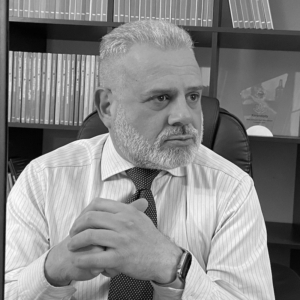
Francesco De Biase
EDITORIAL NOTE
This article was first published in The Human Capital Chronicles, the LinkedIn newsletter by Francesco De Biase,
Co-Founder & CEO of Xerendipity Corporation Ltd. Subscribe at LinkedIn Newsletter.
 ©Xerendipity Corporation Ltd.