

Human Capital Value and the double ROI of a signing — DIOGENE Soccer Player HC Value & ROI.
A transfer fee answers one question only: what did the market agree to pay.
It says nothing about what the player is actually worth to the club that signs him, and even less about what he is worth to the people who financed the deal.
DIOGENE Soccer Player HC Value & ROI was built to close that gap, combining two proprietary DIOGENE algorithms into a single instrument: Player Human Capital Value and Soccer Player ROI.
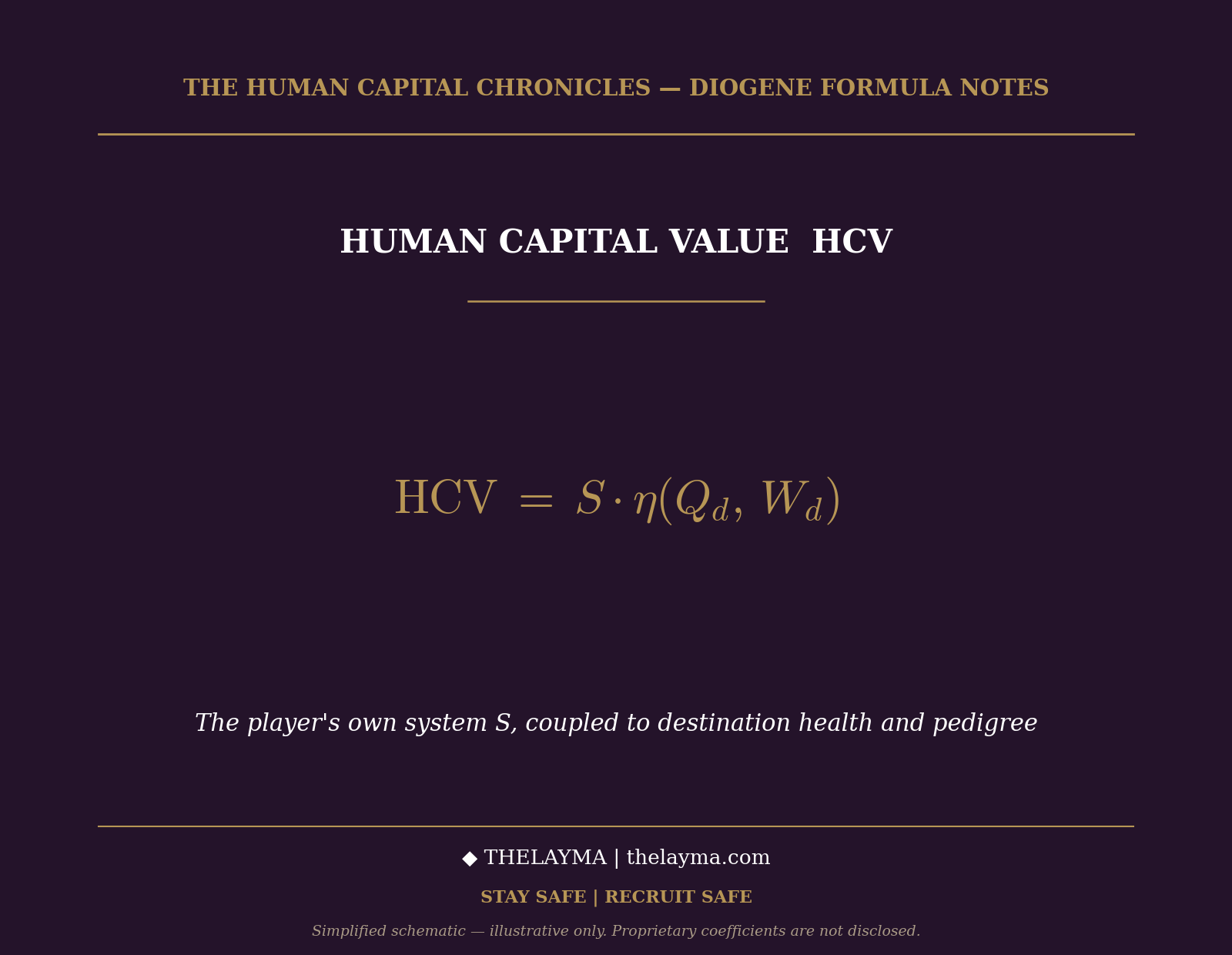
Human Capital Value, the first half of the model, is deliberately indifferent to market price.
It starts from a player’s own system of qualities — technical, athletic, tactical, mental, and disciplinary — set against his role, and asks what that system is actually worth once placed inside a specific environment.
This is where the model departs from a simple skills rating.
A destination club’s health and winning pedigree do not sit beside the player’s ability; they couple with it, through an entropic coupling factor the model calls η, borrowed deliberately from a thermodynamic metaphor: an isolated system behaves differently from one that is coupled to another.
The same player, the same technical profile, produces a different realised value depending on the system he joins — and η is confined strictly to sporting value at the moment of signing.
Resale value and commercial value are left untouched by it, on the operator’s explicit instruction.
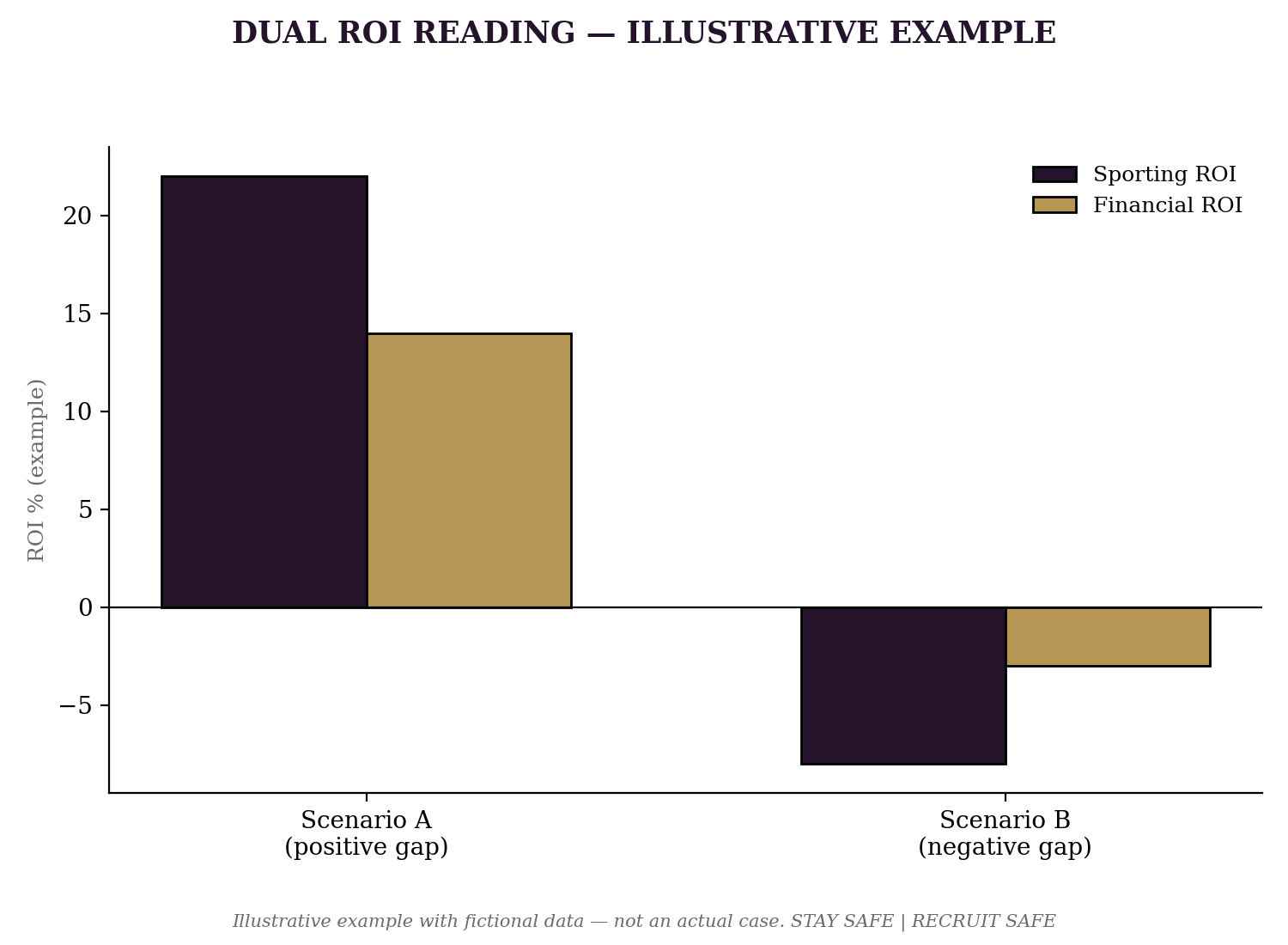
Soccer Player ROI, the second half, reads the same signing twice — once as a sporting decision, once as a financial one.
Both readings depend on an Environmental Gap that runs in both directions: a move can close a gap or open one, and the model does not assume that bigger is always better.
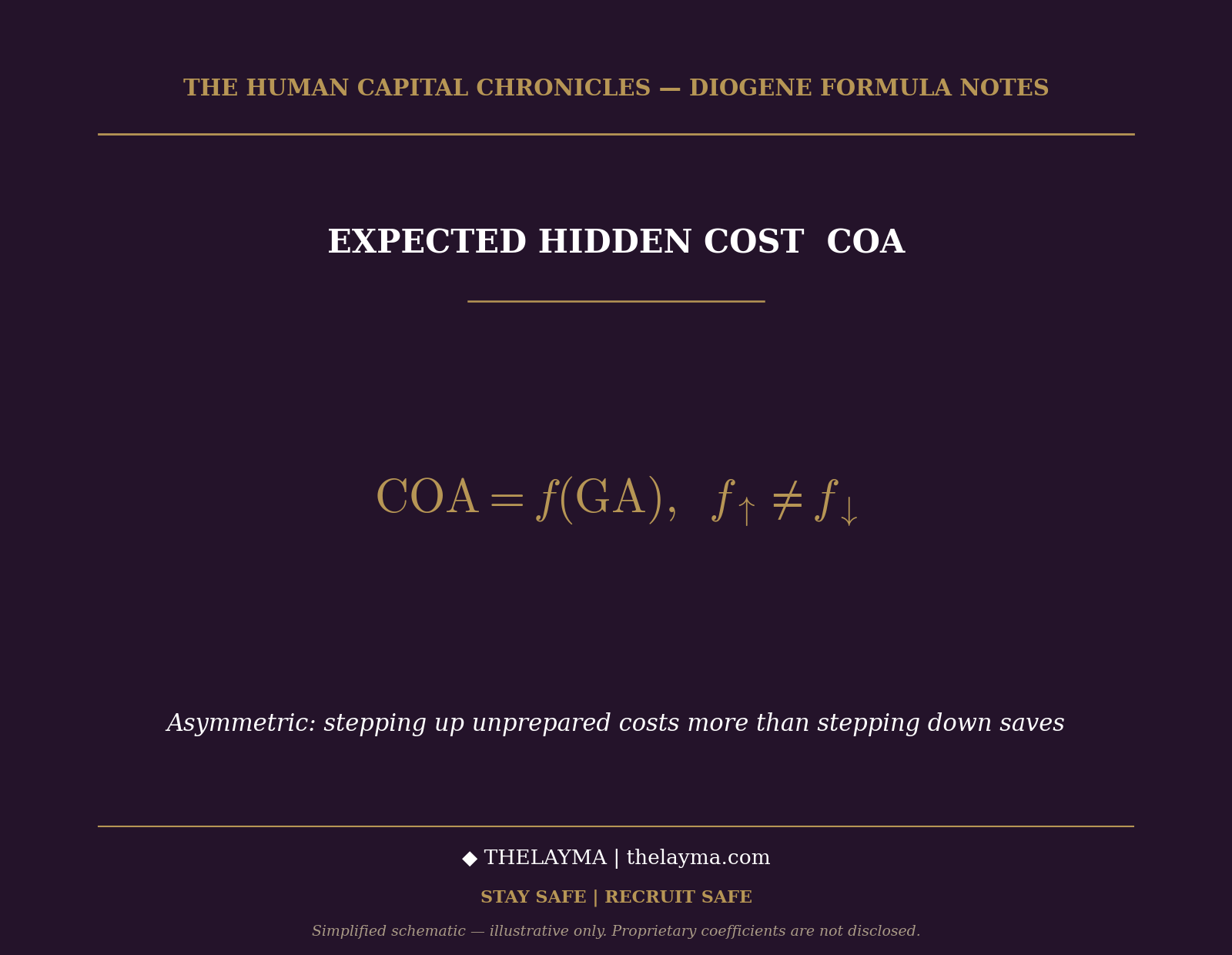
Where the gap runs against the player, an Expected Hidden Cost appears, and it is deliberately asymmetric — the cost of stepping up into a demanding environment unprepared is not mirrored, in scale, by the saving of stepping down into an easier one.
Two further scores of one to five govern the two clubs being compared — the one the player is leaving, and the one he might join — competitive level, institutional health, and winning pedigree, each fixed to a strict rubric.
A single trophy, however well earned, does not by itself lift a club’s pedigree score above the middle of the scale; that requires repetition, and a sustained European presence besides.
Financial health and a talent for buying low and selling high do not raise it either — pedigree measures something else entirely.
The output sets the Human Capital Value directly beside the market value the operator supplies, so the model can say, in plain terms, whether a fee is supported by the capital the player can actually activate in this specific environment, or whether it is not.
It reports both readings of return — sporting and financial — the Expected Hidden Cost, and the sign of the Environmental Gap that produced it.
As with every DIOGENE algorithm, the coefficients are provisional, built to be recalibrated against real cases rather than held as a closed formula.
What the model never does is offer financial or legal advice.
It offers a discipline for asking a better question before the money changes hands.
Asking that better question before the money moves is the work of THELAYMA Aestima.
This text has been produced by Xerendipity Corporation Ltd. under the DIOGENE framework. It describes a proprietary methodology; all coefficients are provisional and subject to recalibration against real cases. This document does not constitute financial, legal or investment advice.
Xerendipity Corporation Ltd. | thexerendipity.com — THELAYMA | thelayma.com

 ©Xerendipity Corporation Ltd.
 ©Xerendipity Corporation Ltd.